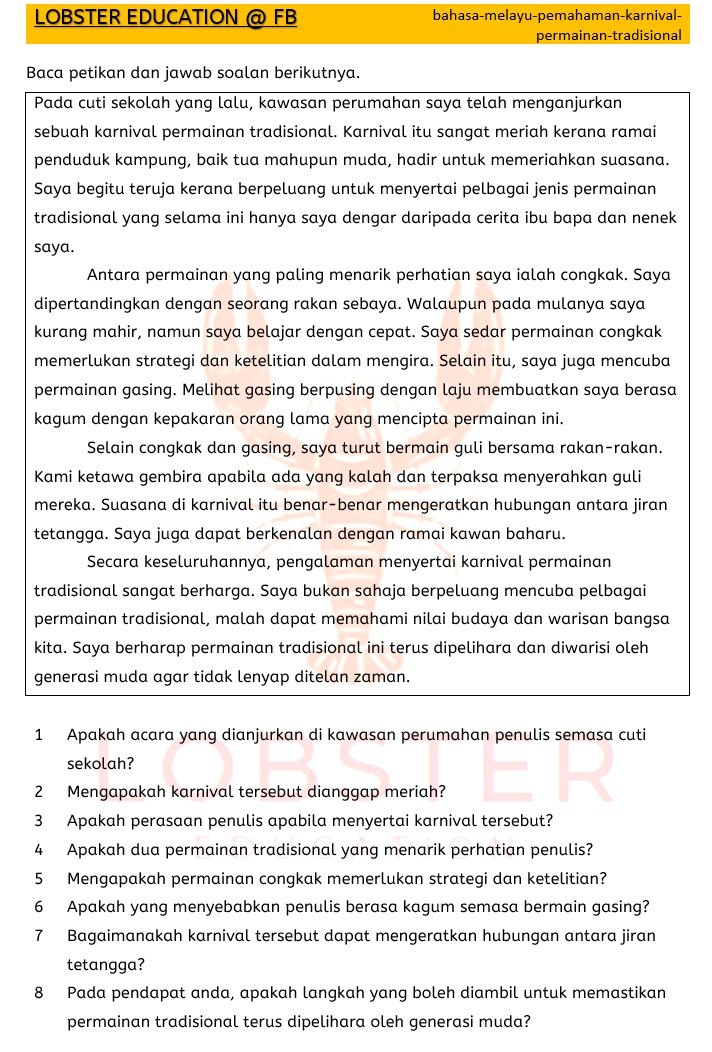
Nota Penuh UEC Junior BM / UEC Junior BM Notes / 统考初中国文笔记
Why UEC Junior BM Rumusan and Karangan Feel So Hard to Study For
If your child is preparing for UEC Junior BM, you’ve probably noticed something frustrating: they understand Bahasa Malaysia reasonably well, but still lose marks on Rumusan and Karangan — not because they don’t know the language, but because they don’t know the format. UEC graders are strict about structure, and a well-written answer in the wrong shape still gets penalized.
Here’s a breakdown of the two format systems that matter most, based on our full UEC Junior BM revision notes.
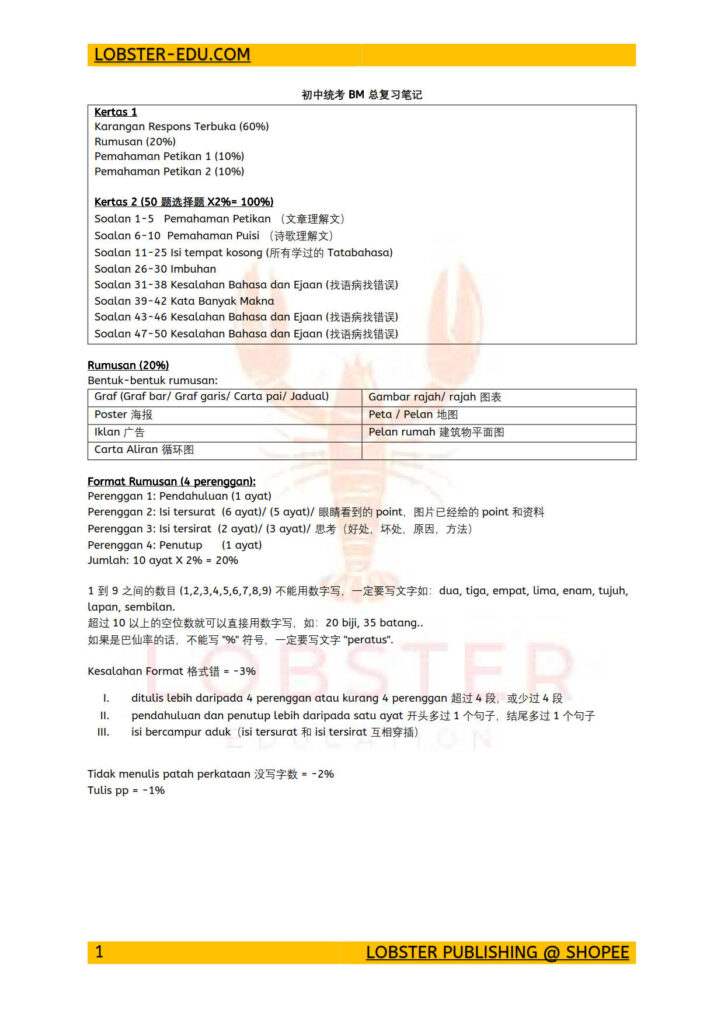
Rumusan (20%): The 4-Paragraph Rule
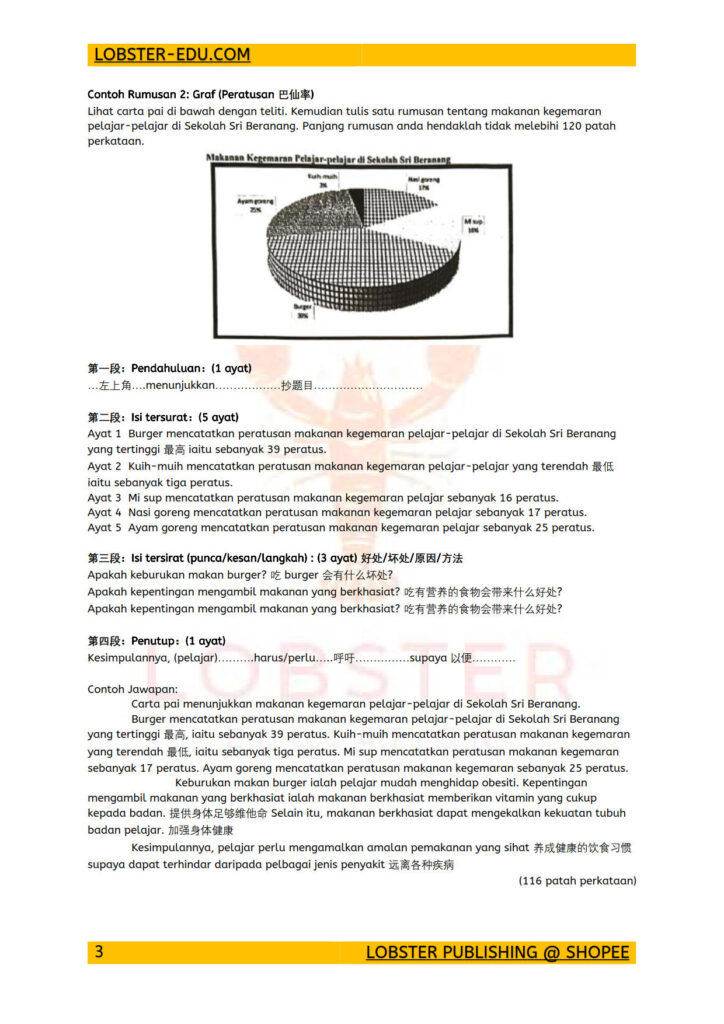
Every Rumusan must follow exactly 4 paragraphs, totaling around 10 sentences (roughly 2% per sentence):
- Pendahuluan (1 sentence) — restate what the stimulus shows
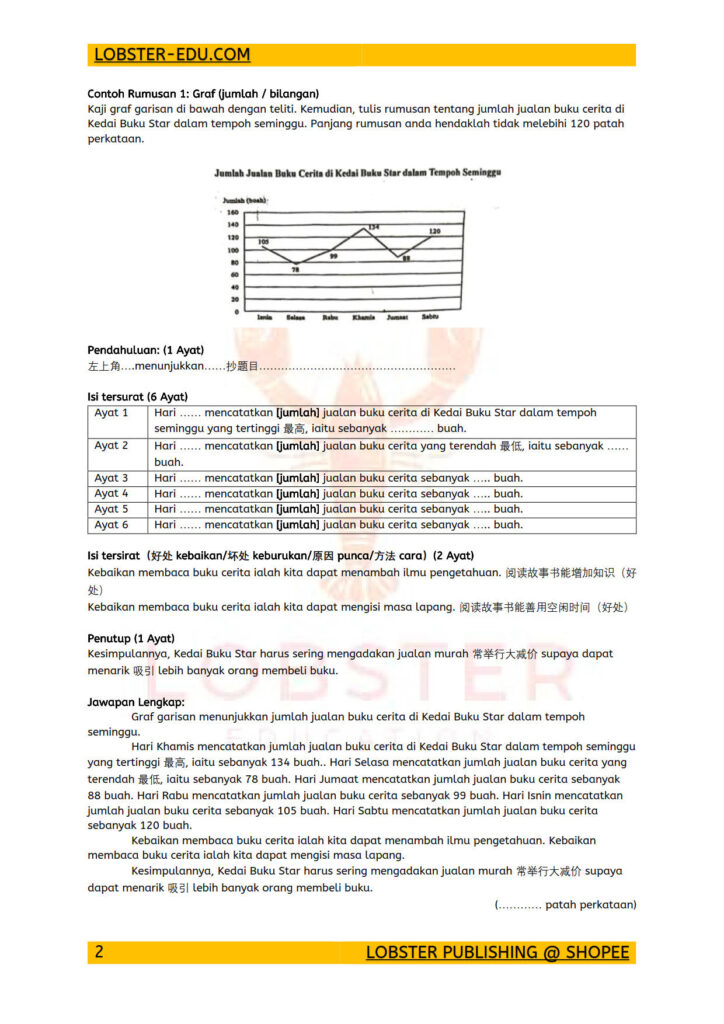
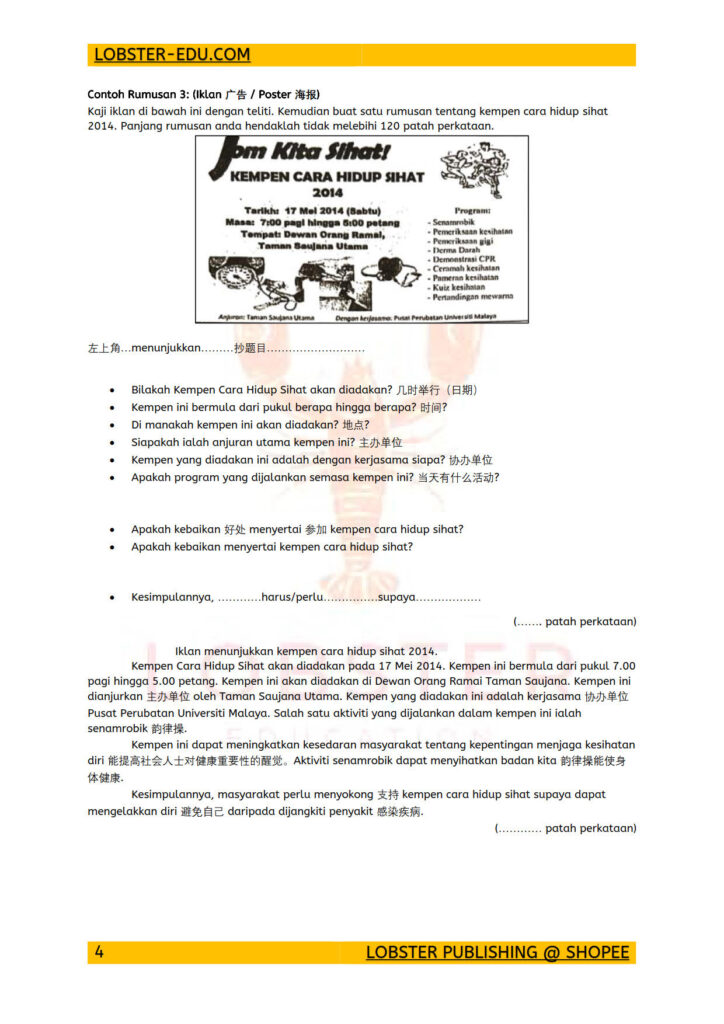
- Isi Tersurat (5–6 sentences) — the “visible” facts directly from the graph, poster, or map
- Isi Tersirat (2–3 sentences) — the “implied” content: benefits, drawbacks, causes, or methods that require inference
- Penutup (1 sentence) — a closing call to action
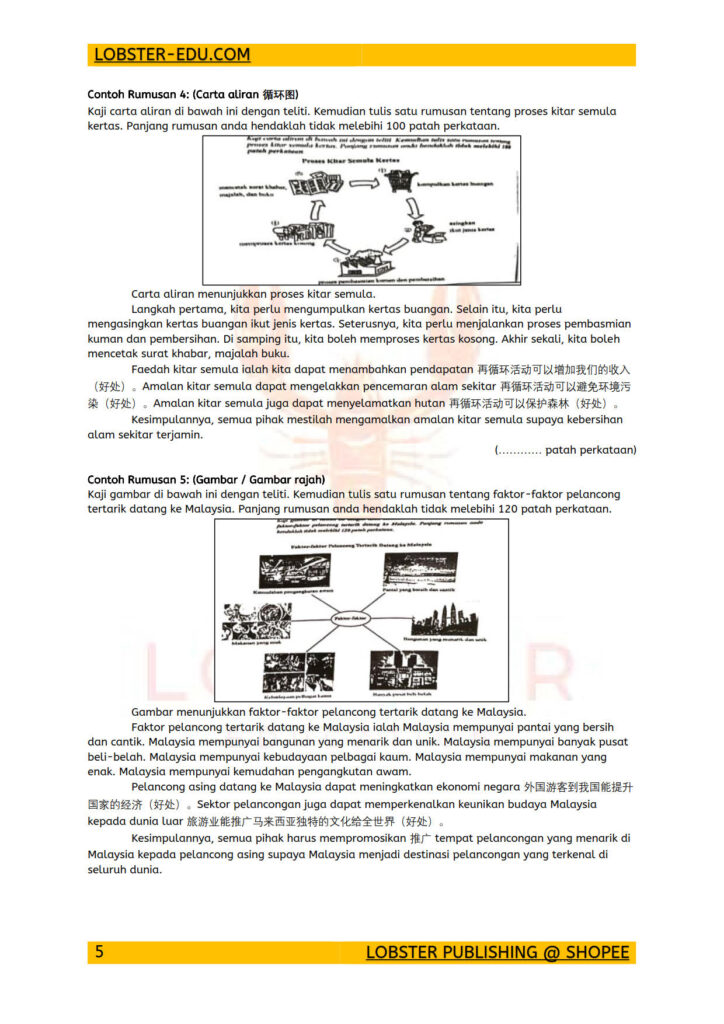
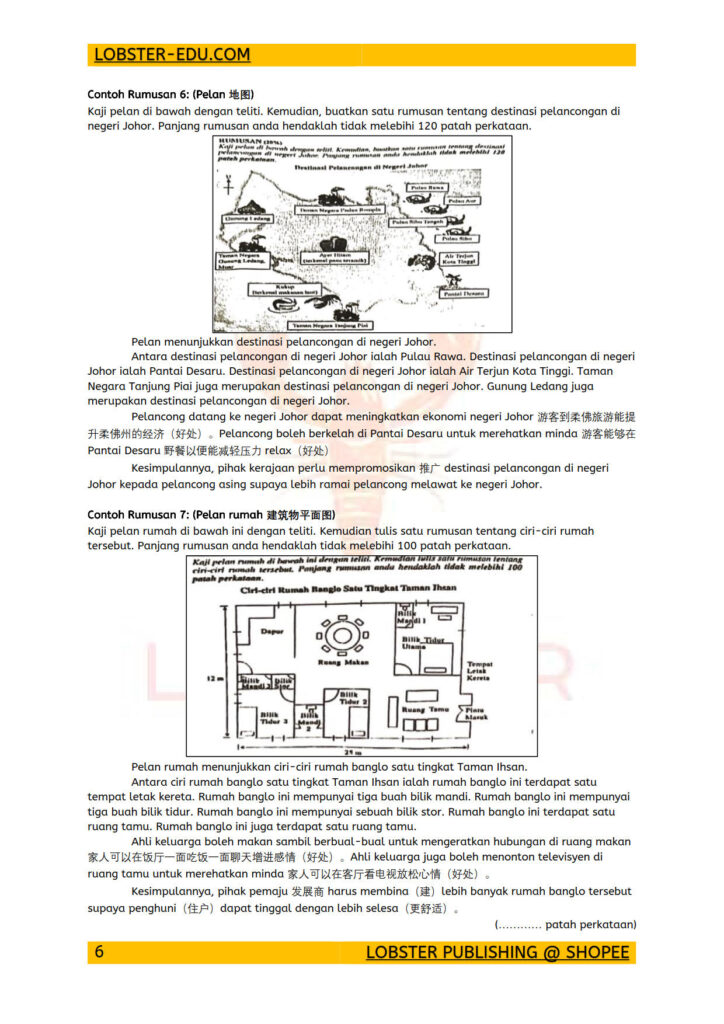
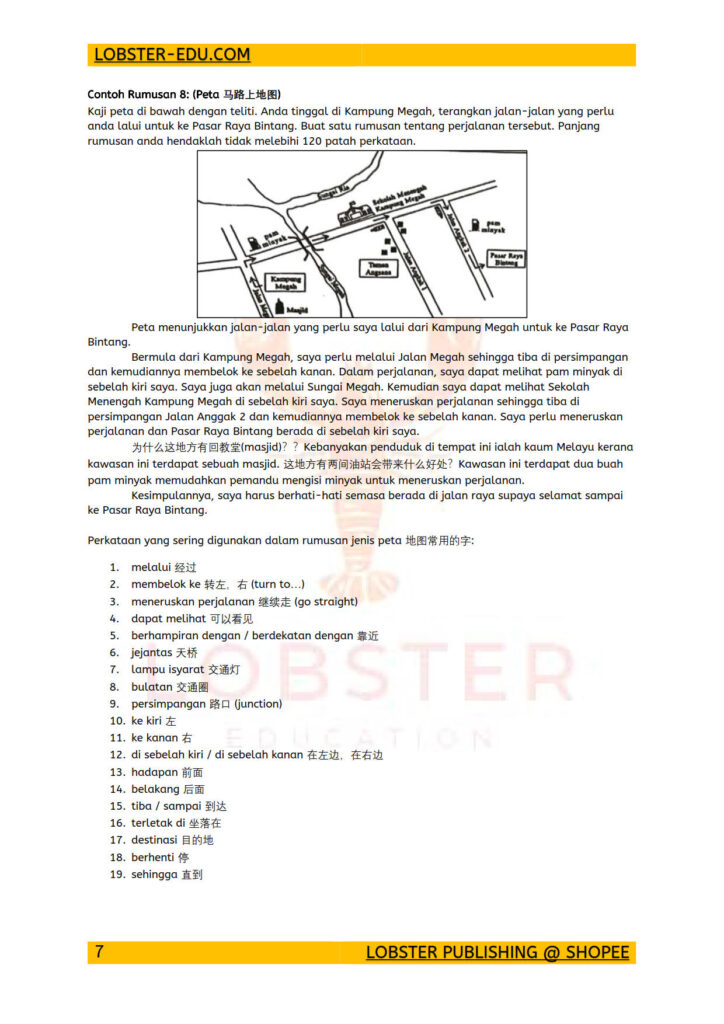
Format mistakes are penalized hard: writing more or fewer than 4 paragraphs costs 3%, forgetting the word count costs 2%, and mixing “pp” (patah perkataan/point form) into full sentences costs 1%. Students need practice recognizing which stimulus type they’re dealing with — line graphs, pie charts (peratusan), posters, flowcharts, photos, floor plans, and route maps each have slightly different sentence patterns, especially route maps, which require specific transition vocabulary like membelok ke (turn to) and persimpangan (junction).
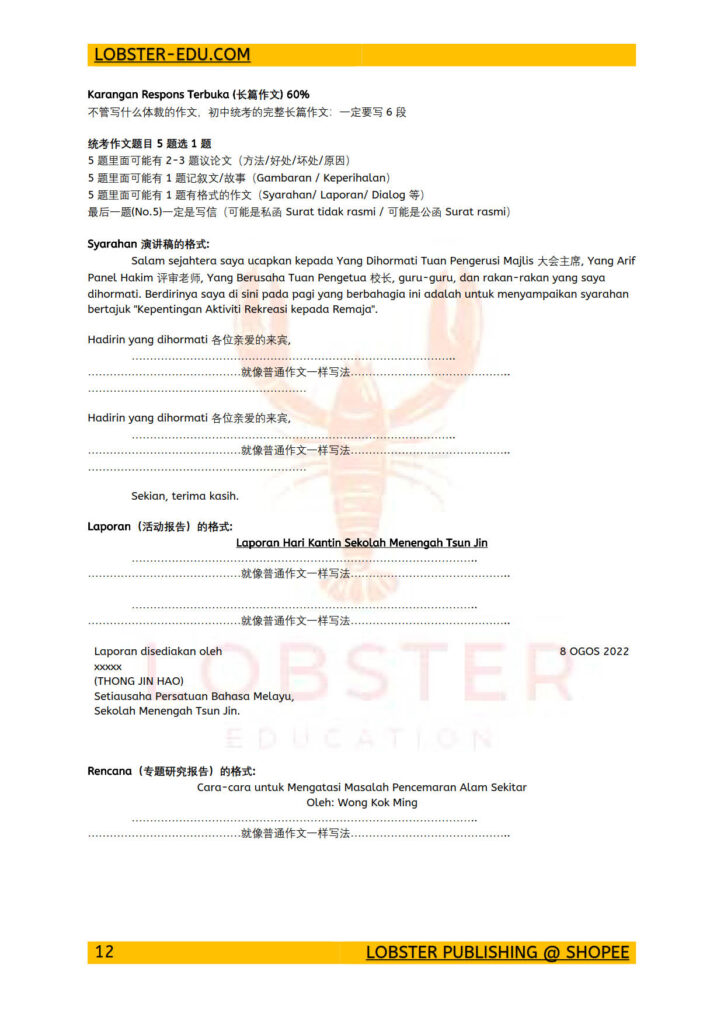
Karangan Respons Terbuka (60%): The 6-Paragraph Formula
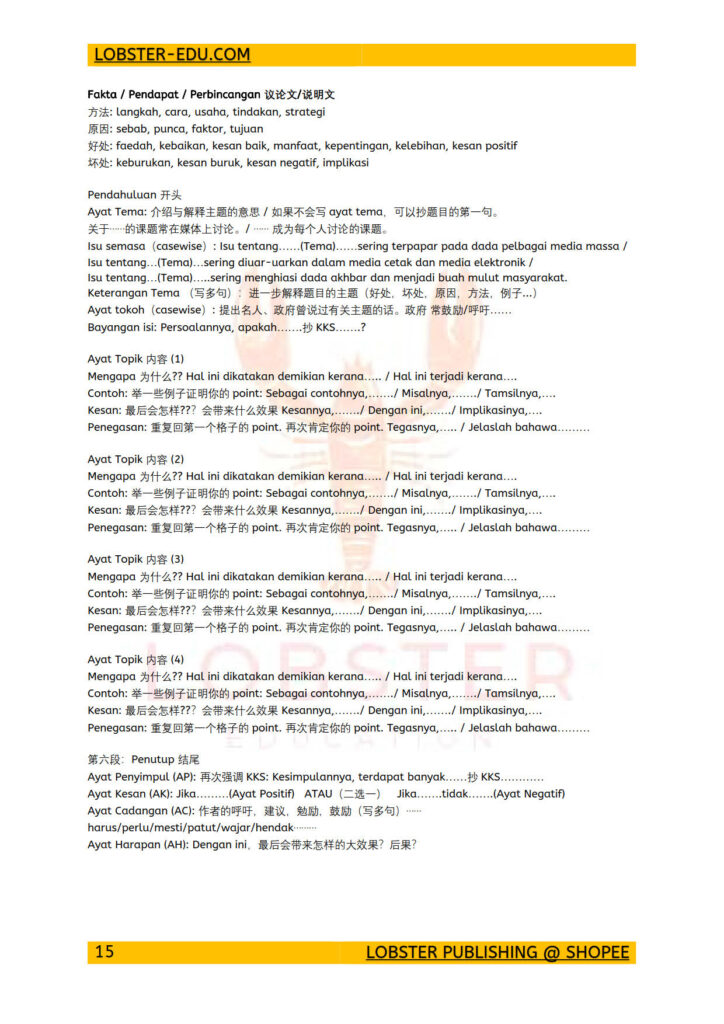
UEC Junior’s long-form essay always follows 6 paragraphs, regardless of genre. Students typically choose from 5 essay prompts, and the format usually breaks down as:
- 2–3 argumentative prompts (methods/benefits/drawbacks/causes)
- 1 narrative/descriptive prompt
- 1 structured-format prompt (speech, report, dialogue)
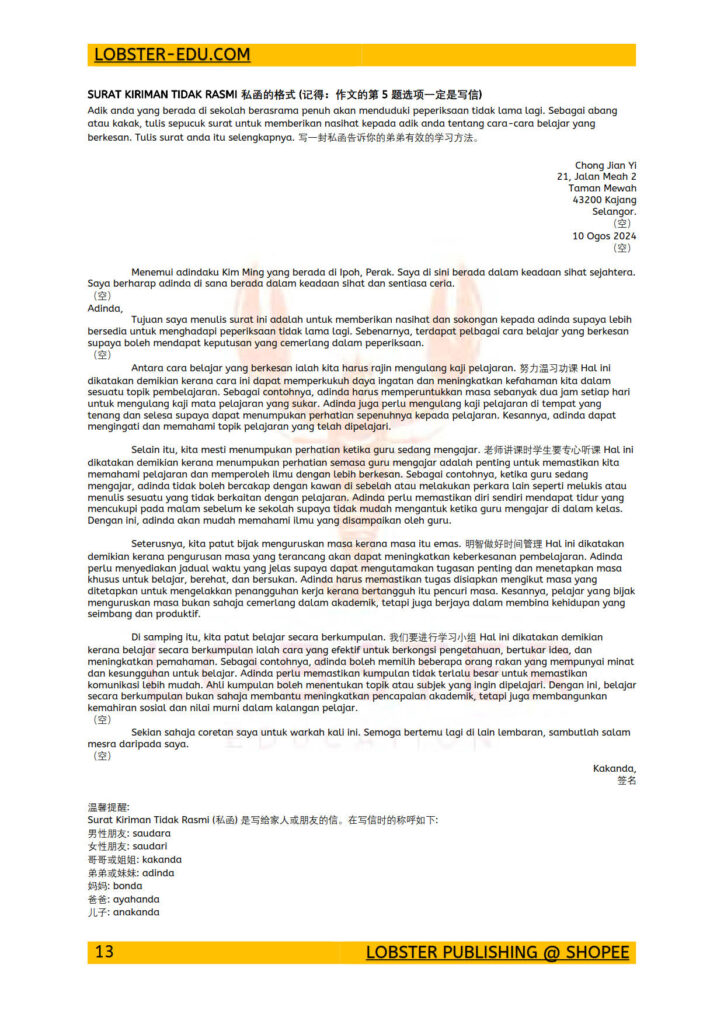
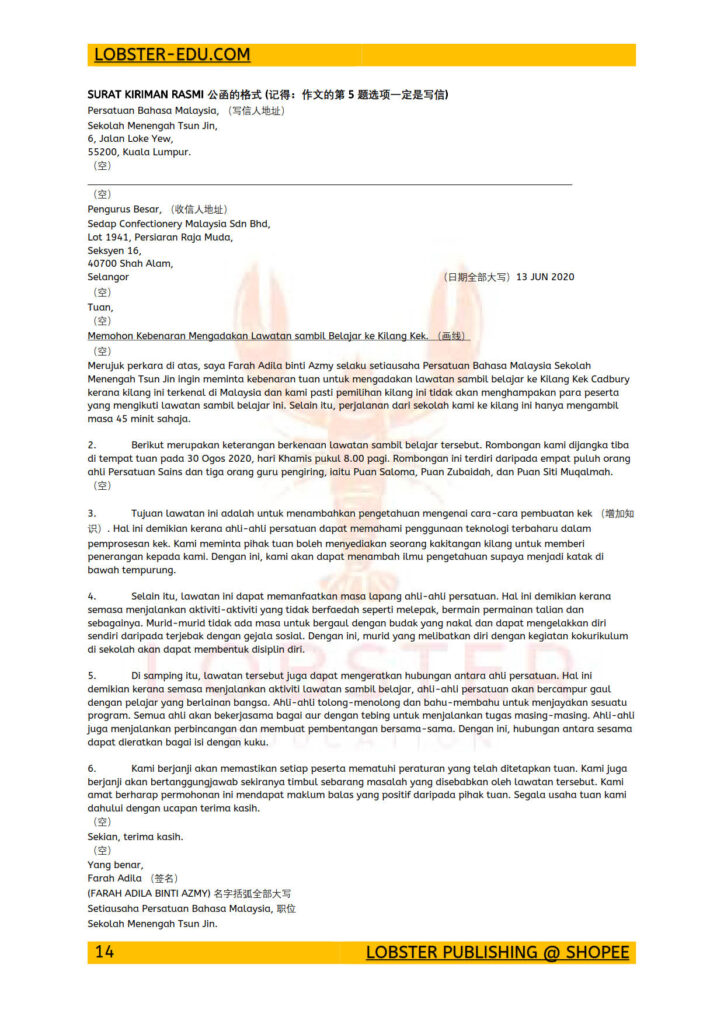
- The final prompt is always a letter — either informal (surat tidak rasmi) or formal (surat rasmi)
For argumentative essays, each body paragraph follows a Mengapa → Contoh → Kesan → Penegasan pattern (why → example → effect → reaffirm), which gives students a repeatable formula instead of freezing on what to write next.
Letters have their own strict conventions too — informal letters use specific kinship terms (adinda for younger sibling, kakanda for older sibling, bonda/ayahanda for parents), while formal letters require addressed headers, all-caps dates, and numbered paragraphs.
The Real Problem: Grammar Traps, Not Vocabulary
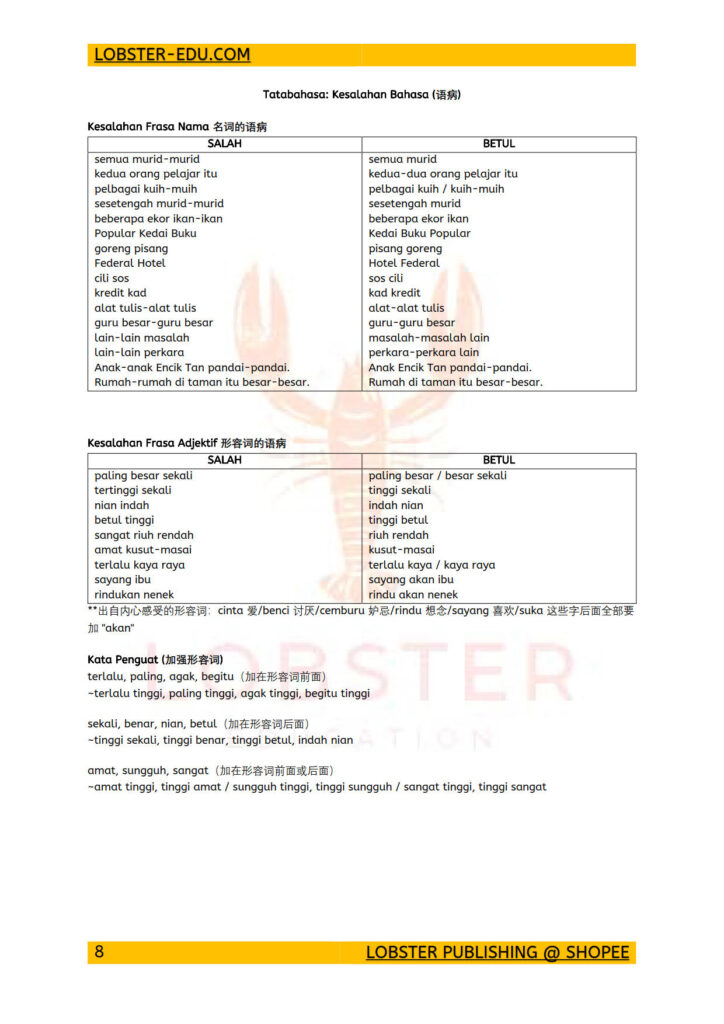
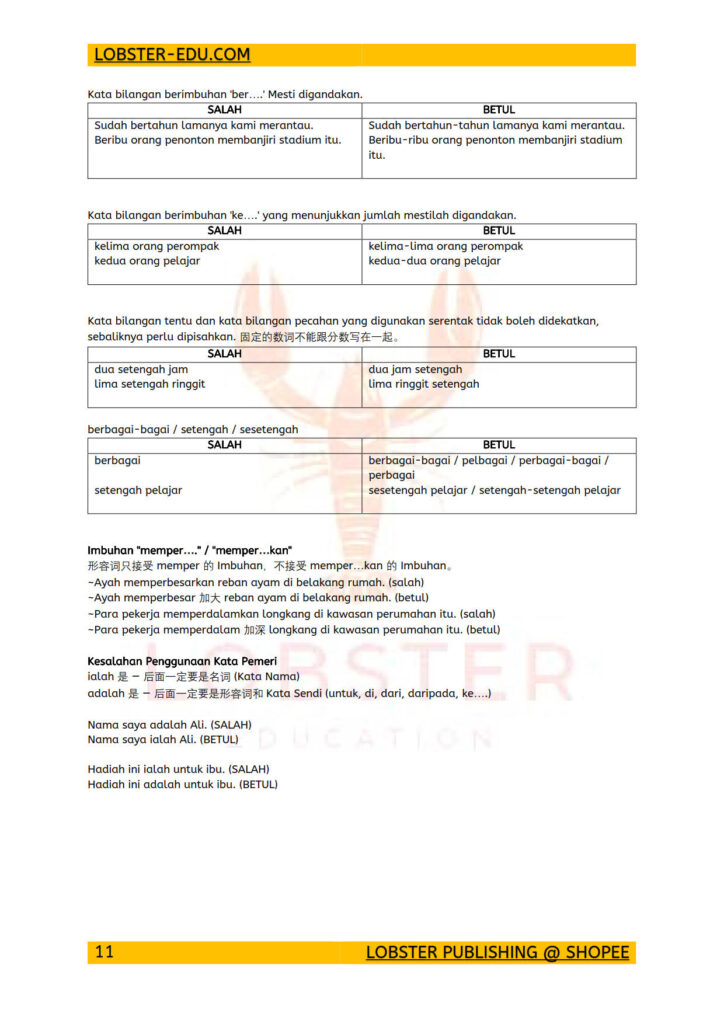
A lot of mark-losing isn’t about what students say — it’s small grammar errors that graders are trained to catch:
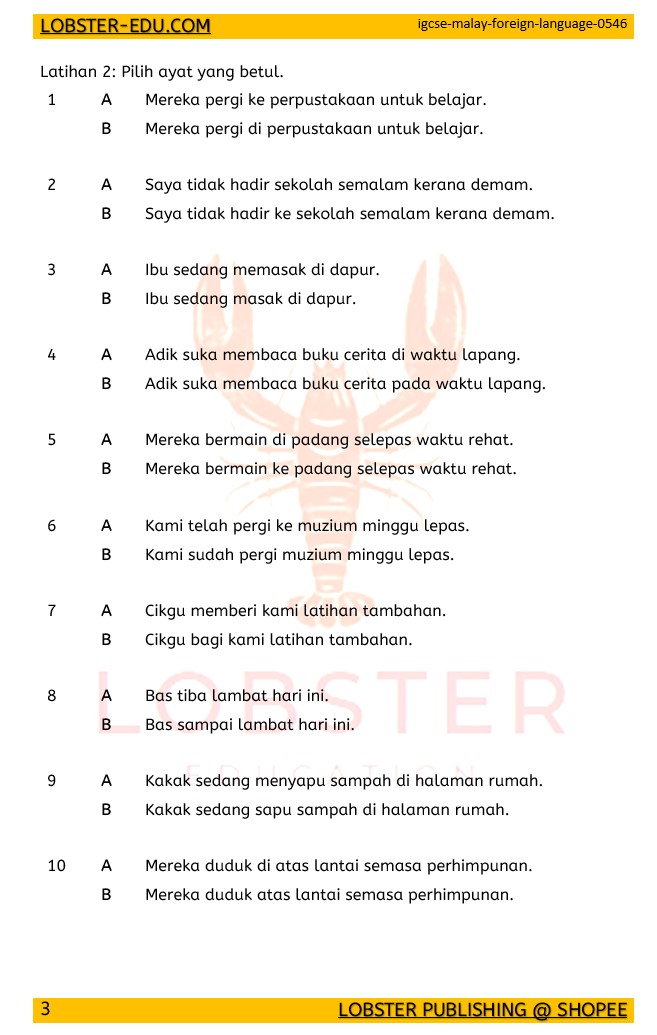
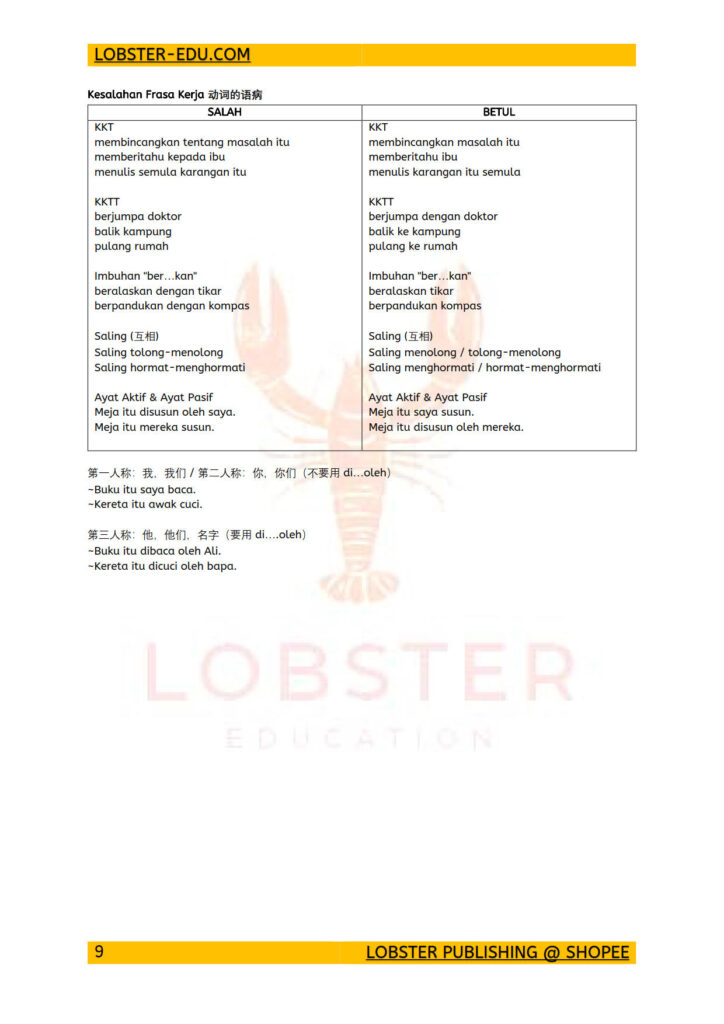
- Kata Pemeri confusion: ialah must be followed by a noun; adalah must be followed by an adjective or preposition. Mixing these up (“Nama saya adalah Ali” instead of “ialah Ali”) is a very common error.
- Passive voice by pronoun: first/second person (“saya,” “awak”) should never use di…oleh; third person and named subjects require it.
- memper- vs memper-kan: adjectives only take memper-, never memper-kan — a distinction most students never get explicitly taught.
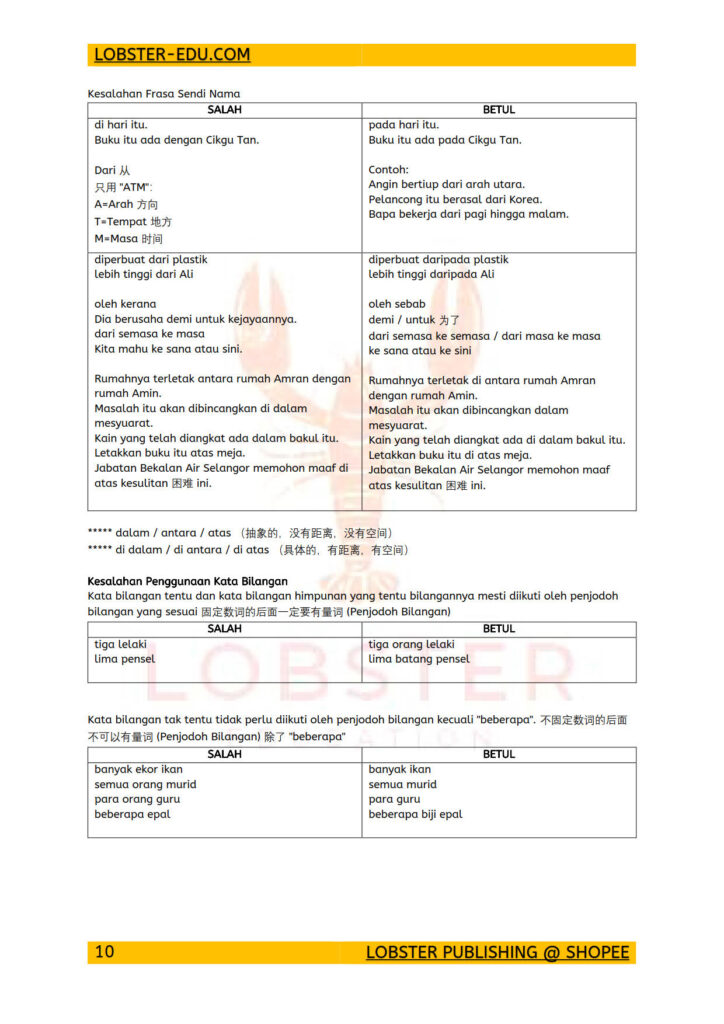
These aren’t things you can absorb from reading — they need to be drilled with contrast examples (salah vs betul), which is why structured notes matter more than general BM revision for this exam.
Want the complete notes? Our UEC Junior BM Rumusan & Karangan set includes all 8 Rumusan stimulus types with full worked answers, every Karangan format template (speech, report, formal/informal letters), and the complete grammar error checklist — available now on our Shopee store.
UEC Junior BM Rumusan和Karangan为什么这么难准备?
如果你的孩子正在准备UEC Junior BM考试,你可能已经发现一个让人头疼的现象:孩子的国文程度其实不差,但Rumusan和Karangan还是一直被扣分——问题往往不是语言能力不够,而是不熟悉格式。统考的评卷老师对结构要求非常严格,就算内容写得再好,格式不对照样扣分。
以下是根据我们完整版UEC Junior BM总复习笔记整理出的两大格式重点。
Rumusan(20%):4段公式
每一篇Rumusan都必须严格遵守4段结构,总共大约10个句子(大致每句占2%):
- Pendahuluan 开头(1句)——重述图表/资料要表达的主题
- Isi Tersurat 明显内容(5-6句)——图表、海报或地图上直接看得到的事实
- Isi Tersirat 隐含内容(2-3句)——需要推理的内容:好处、坏处、原因或方法
- Penutup 结尾(1句)——呼吁式的总结句
格式错误扣分很重:段落数不对(多于或少于4段)扣3%,没写字数扣2%,把点列式(pp)内容混进正式句子扣1%。学生需要练习辨认不同类型的资料——折线图、圆饼图(巴仙率)、海报、循环图、照片、平面图、路线图,每一种都有各自专属的句型,尤其是路线图题,需要用到特定的过渡词汇,如membelok ke(转向)、persimpangan(路口)等。
Karangan Respons Terbuka(60%):6段公式
不管写哪种体裁,UEC Junior的长篇作文一律要求写满6段。学生通常从5道题目中选1题作答,题型大致分布如下:
- 2-3题议论文(方法/好处/坏处/原因)
- 1题记叙文/描写文
- 1题格式作文(演讲稿、报告、对话等)
- 最后一题一定是写信——私函(surat tidak rasmi)或公函(surat rasmi)
议论文的每一个内容段,都遵循**Mengapa(为什么)→ Contoh(例子)→ Kesan(效果)→ Penegasan(重申立场)**的固定公式,让学生有一套可以反复套用的写作模板,不必每次都从零构思。
书信题也有自己一套严格规矩——私函要用特定的称谓词(写给弟弟用adinda,写给哥哥/姐姐用kakanda,写给父母用bonda/ayahanda),公函则需要标准地址格式、日期全大写、以及编号段落。
真正的问题:不是词汇,而是语法陷阱
很多失分的原因,其实不在于学生”说了什么”,而是评卷老师专门训练来抓的小语法错误:
- Kata Pemeri 混淆: ialah 后面一定要接名词,adalah 后面一定要接形容词或介词。混用(例如写”Nama saya adalah Ali”而不是”ialah Ali”)是非常常见的错误。
- 被动语态的人称限制: 第一/第二人称(saya、awak)绝对不能用di…oleh结构;第三人称和具体人名则必须用。
- memper- 和 memper-kan 的区别: 形容词只能接受memper-,不能接memper-kan——这是大多数学生从没被明确教过的细节。
这些语法点光靠”多读多背”很难吸收,必须透过对照错句和正确句(salah vs betul)反复练习才能真正掌握,这也是为什么针对性的笔记比泛泛的国文复习更有效。
想要完整笔记? 我们的UEC Junior BM Rumusan & Karangan笔记涵盖全部8种Rumusan资料类型的完整范文、所有Karangan格式模板(演讲稿、报告、私函/公函),以及完整语法纠错清单,现已在Shopee店铺上架。
Like this worksheet? Get the full PDF with answer key.
📥 Get full worksheet on Shopee